
NELE
In a world where electricity is scarce and industrial production has come to a standstill, this concept introduces a non-electric coffee maker. The design operates fully independently of the power grid and demonstrates how intelligent material choices and local upcycling can offer a response to industrial scarcity.
Where the initial research still focused on heating water using solar energy, this final concept assumes that the user already has access to hot water, for example via a solar boiler. The real innovation of this design therefore lies in its material selection and production process. The device is entirely built from local waste streams that are processed into a functional object using a minimum of mechanical energy.
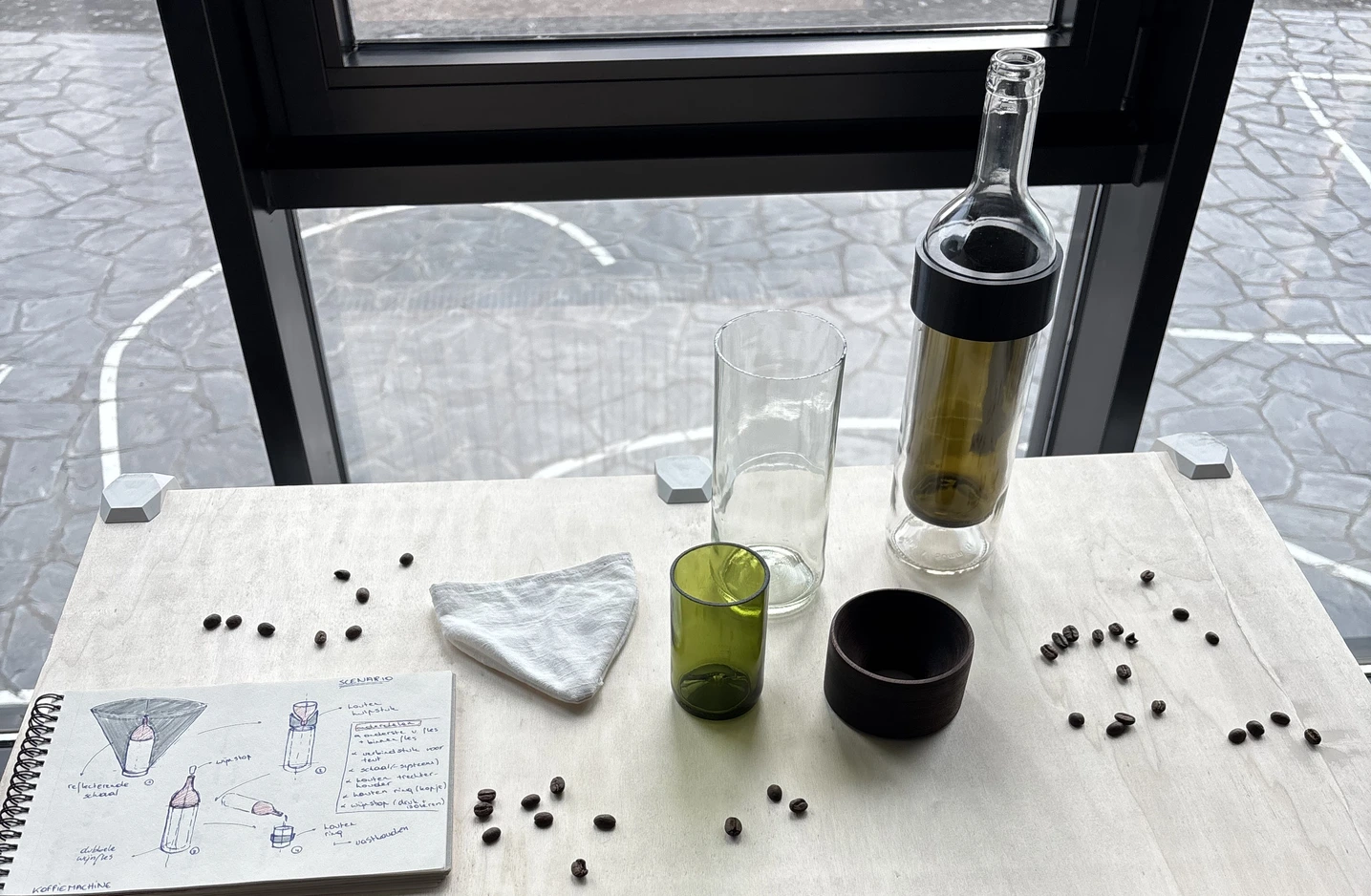
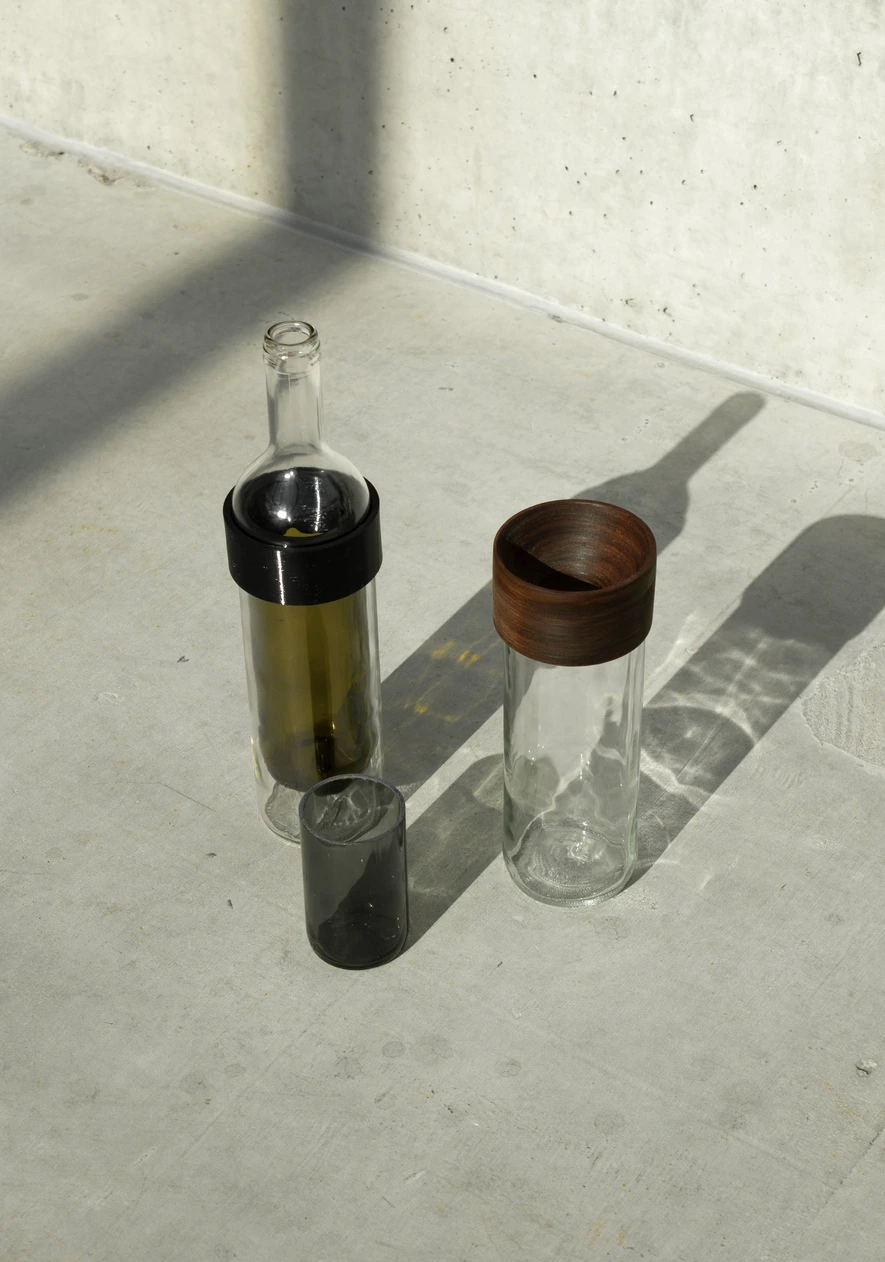
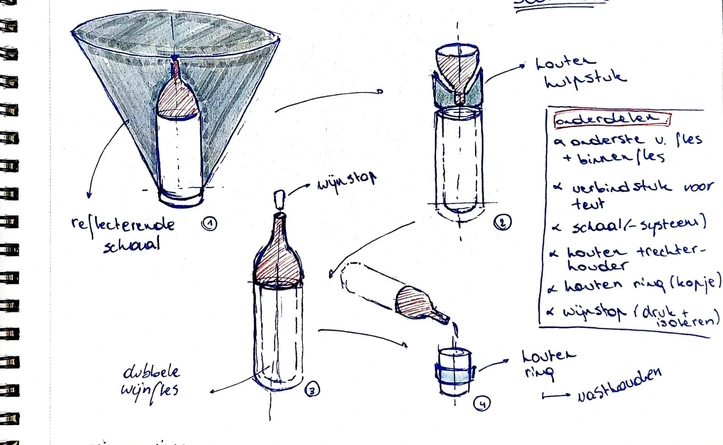
The base consists of discarded glass wine bottles with varying diameters. Standard glass recycling requires enormous amounts of energy because the glass must be remelted at extremely high temperatures. This design bypasses that process: by manually cutting the bottles and sliding them into one another, a double-walled housing is created. The air layer between the bottles provides passive thermal insulation, preventing the coffee from cooling down immediately after brewing.
The glass bottle spout has a clever dual function: in its normal position it serves as a pouring spout, but when inverted it transforms into the filter holder. This spout rests on a support piece made of European reclaimed walnut wood, combined with a reusable, washable cotton filter that eliminates the need for disposable paper filters.
The strength of this concept lies in its holistic approach to scarcity. The design intelligently manages energy on all levels, not only in its function and use by being fully manual, but especially in its material choices and production. By upcycling existing materials locally instead of processing them industrially.
IRO VAN DEN STEEN